
Void and representation as nesting dolls: 'Benny's Video' (1992)
A film about video violence forces a confrontation with the terrifying absence of direct experience at its core.

Benny’s Video (1992), dir. Michael Haneke, Austria/Switzerland
After Benny kills the girl he meets at the video store, he goes through her bag and finds nesting dolls. He opens them, tossing each one aside until he reaches the center, which is empty.
Leaving aside for now that Benny’s Video is itself a mediation (a fiction film), we can say that its sequences involving videos—the video of the pig’s death, the video of the girl’s death, and the video of the view from Benny’s bedroom window—establish four levels of mediation extending out from a void (“0”) at their center. They are as follows:
An experience as lived by its subject: the pig’s death, the girl’s death, the view from Benny’s window.
The experience as lived first-hand by Benny: Benny’s experience of the pig’s death, which he records; his experience of the girl’s death, which he records; his experience of the view from his window.
The recording of Benny’s experience of another’s: Benny’s video of the pig’s death, his video of the girl’s death (“Benny’s video”), the live feed of the view from his window.
People watching Benny’s recording of his experience of another’s: Benny and the girl watching the pig video, Benny and his parents watching Benny’s video, Benny and the girl watching the live feed of the view from his window.
Us watching people watch Benny’s recording of his experience of another’s: us watching the above.1
We can call each of these levels LMx.
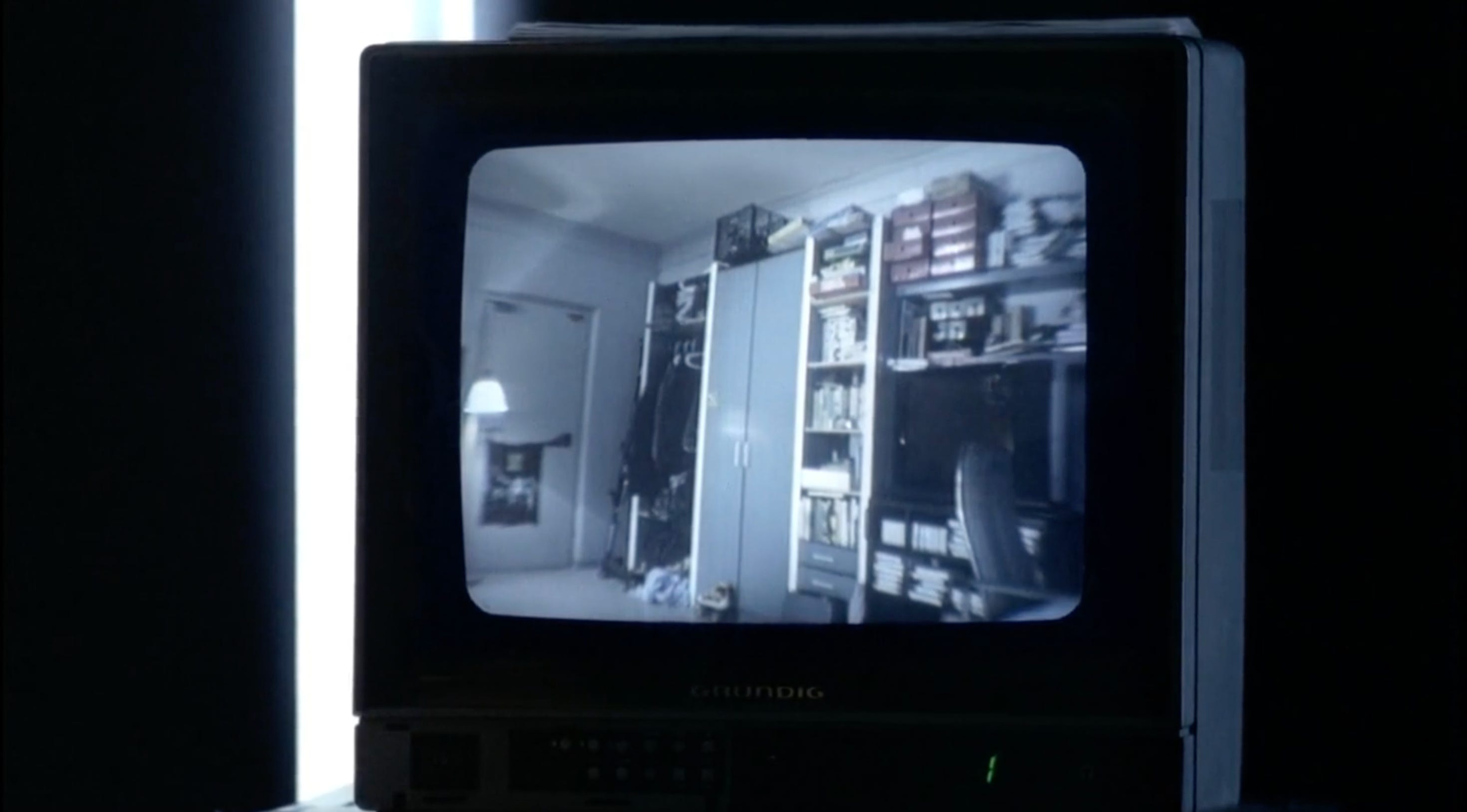
The film sits most comfortably somewhere between the first and second levels of mediation—at LM1 and LM2. At LM1, we would see the characters going through the events of the film and reacting to them. This is the “real life” of the film. LM2, however, germinates the film. It opens with the video of the pig’s death, which someone plays, rewinds, and slows down. (We can’t tell who manipulates the footage, which prevents us from moving into LM3—someone else’s experience of a recorded experience. This makes LM2 an interesting level of mediation: we can say that it is the “direct” experience of a recording, one that subsumes the entire film for its moment and presents itself to no one besides the film’s viewer.) It sparks Benny’s interest in violence, which prompts him to show the video to the girl from the video store.2 It becomes the prime object of the film’s interest after Benny murders the girl, both as the evidence of his crime and his way of reliving the experience.
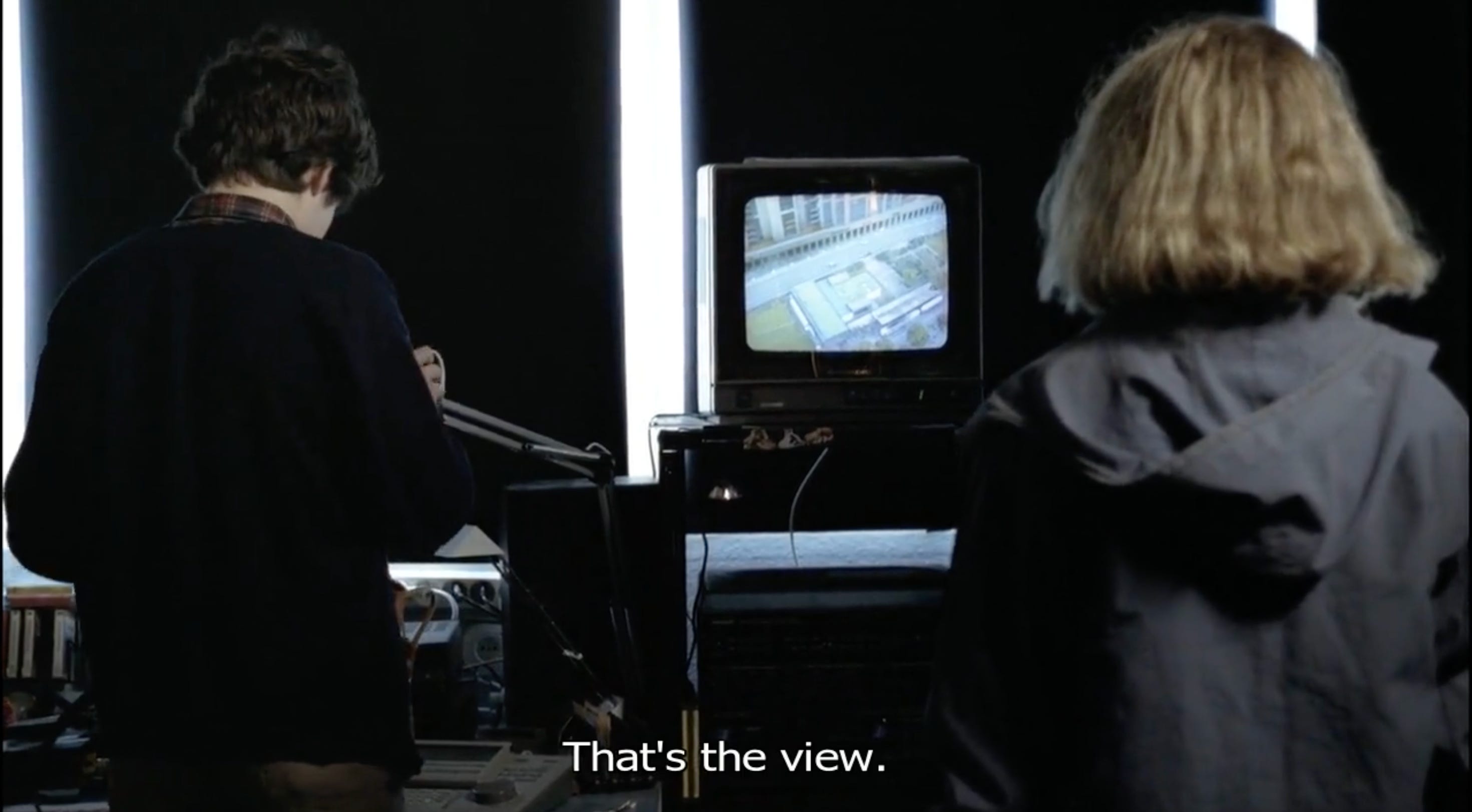
I write “we would see the characters going through the events of the film” above because, in the case of the three videos, we do not see Benny experiencing the events depicted in them. We don’t see Benny watching the pig’s death, nor do we see him recording it. We don’t see Benny murder the girl except for through his TV as his camera records it. We don’t see Benny look out the window and experience the view first-hand because his windows are blacked out.3 At first, I didn’t think anything of this.
After Benny shows his parents his video of the girl’s murder and they discuss how they will cover it up, we see the view from his window for the first time, from a similar angle that Benny captures it on the live feed, but at night.
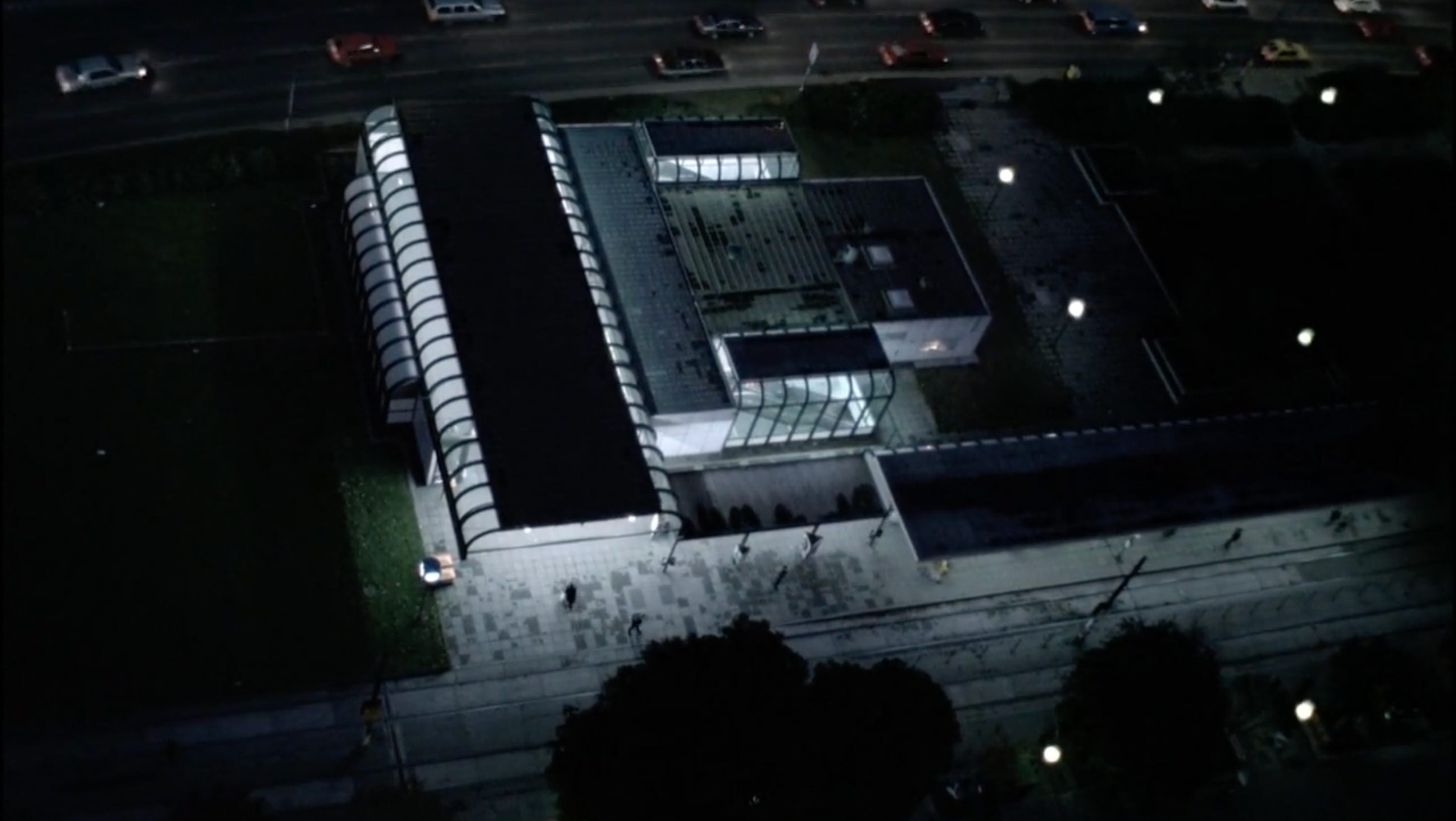
The film suddenly gives us our first unmediated4 experience of something once only experienced as a recording. It jumps from LM2—a direct experience of a recording—to LM0—a direct experience of reality, or the “inner life” of the film compared to LM1’s “real life”. Along this jump, it exposes the absence that we were not previously aware of, the absence of LM1: we realize that we have never seen Benny look out the window, nor have we seen him at the place where the pig is killed, nor in his own bedroom at the moment that he kills the girl.
We have seen recordings of two deaths, but not our main character witnessing them first-hand. We now experience something—the view—closer to the center of real experience than our witnessing it through the eyes of our main character. We can extrapolate this jump from LM2 to LM0 and try to imagine the experience of death as lived by the pig and the girl, but we fail because we cannot accurately imagine the experience of dying without actually going through with it. When Benny brings out the butcher’s gun, he holds it to his own chest and tells the girl to pull the trigger. He calls her a coward when she doesn’t. When he turns the butcher’s gun around and holds it to her chest, she tells him to pull the trigger. When he doesn’t, she likewise calls him a coward, and then he pulls the trigger.
We are now faced with the truly terrible void of one’s lived experience of death that all representations in Benny’s Video revolve around. Reviews of the film seem to focus on a message about video culture desensitizing young people to violence and encouraging them to isolate from one another, resulting in a lack of empathy that makes real violence possible.5 I don’t think I can overestimate the psychic damage that seeing videos online of real violence has done to me. I think about the video of Björk’s stalker’s suicide, which I saw as a young teenager, and which I recently saw made into a documentary (Heather Landsman’s The Best of Me) that left me extremely afraid. I think about a video of a murder referenced in the Netflix documentary Don’t F**k with Cats, which was uploaded to a gore site and which, thankfully, I’ve never seen. Benny’s Video upsets me as much as these representations of real violence because it reveals the absence of the witness’s experience of someone else’s death and that person’s own experience of it—of LM1 and the void at the center, LM0. They alert us to our inability to cross the threshold between representation and experience and, ultimately, the void that empirical understanding falls into when we are faced with real death.
I have until this point qualified the levels of mediation by reminding myself that Benny’s Video is only a film, so the girl’s death isn’t real. I’m not so sure about the pig’s. Last week, I saw The Works and Days (of Tayoko Shiojiri in the Shiotani Basin), in which one of the characters kills a wild boar. It looks so real that I have to look away.
At the end of the film, Benny’s father asks him why he did it—why he killed the girl and/or made a tape of it. Benny replies that he wanted to know what it felt like. His father asks, “What did it feel like?” Benny shrugs his shoulders and the experience remains an uncrossable gap.
See other films from: 1990s | Austria, Switzerland
Cross Dissolve is my blog about film, how it makes me feel, and how I see it reappear in my life—how movies and living dissolve into one another. Please subscribe if you enjoyed today’s entry. Thank you for reading!
Love, Tyler
Us watching all of the above wrapped together as Benny’s Video would be a fifth level of mediation, but acknowledging this opens metatextual questions that I’m not ready for.
An object from the video—the butcher’s gun—appears in real life, an unusual and frightening case of something regressing through levels of meditation, crossing a boundary from past object on a predetermined path to present, abetting object.
Interestingly, we do see the girl look out the window, but are not given a following shot of the view itself, preventing us from crossing from LM1 to LM0 and entering into her experience.
Again, “unmediated” with an asterisk, as this is a film.
I.e., causes an action to regress through levels of mediation, like the butcher’s gun.
Happy to have you writing here, Tyler! <3